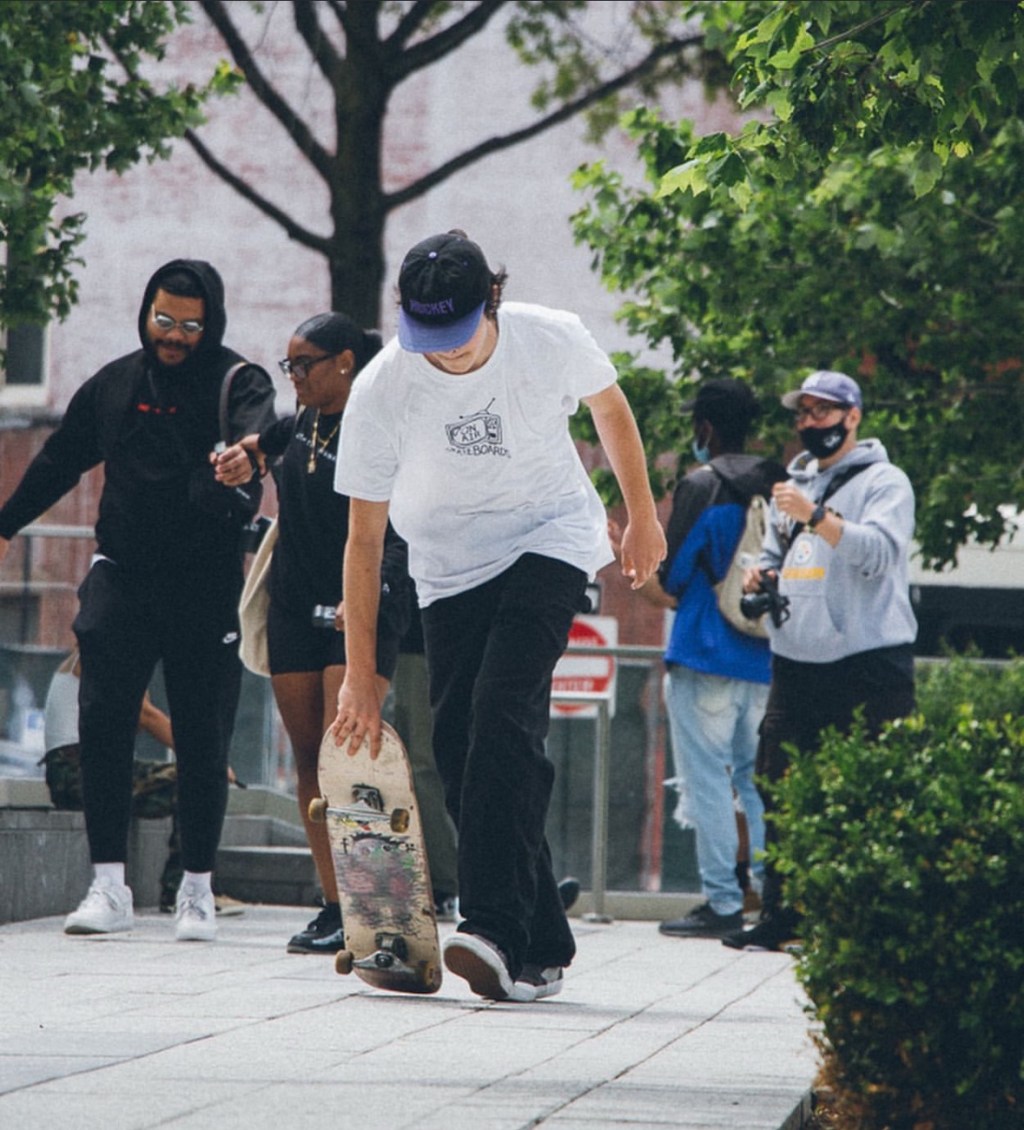
Iden Ottmann Launched “On Air Skateboards” during the global pandemic, turning a challenging time into an opportunity for success. Reflecting on the company’s beginnings, Ottmann shares how he built a community amid widespread isolation and how it paved the way for his success today.Ottmann is a second year Engineering and Design student at the University of Northeastern. Iden grew up in Brooklyn, New York where he and his friends were immersed in the NYC “Skate Scene”. Through the COVID- 19 pandemic Ottmann created a brand called ‘On Air Skateboards. As he grew up with the company they both have taken on many new forms.
Entrepreneur Q&A
Iden Ottmann launched On Air Skateboards during the global pandemic, turning a challenging time into an opportunity for success
Reflecting on the company’s beginnings, Ottmann shares how he built a community amid widespread isolation and how it paved the way for his success today.
By Fiona Averill Staff,Updated February 9, 2025, 4:00 p.m.
BOSTON – Iden Ottmann is a second year Engineering and Design student at the University of Northeastern. Iden grew up in Brooklyn, New York where he and his friends were immersed in the NYC “Skate Scene”. Through the COVID- 19 pandemic Ottmann created a brand called ‘On Air Skateboards. As he grew up with the company they both have taken on many new forms.
Q: What is On Air Skateboards?
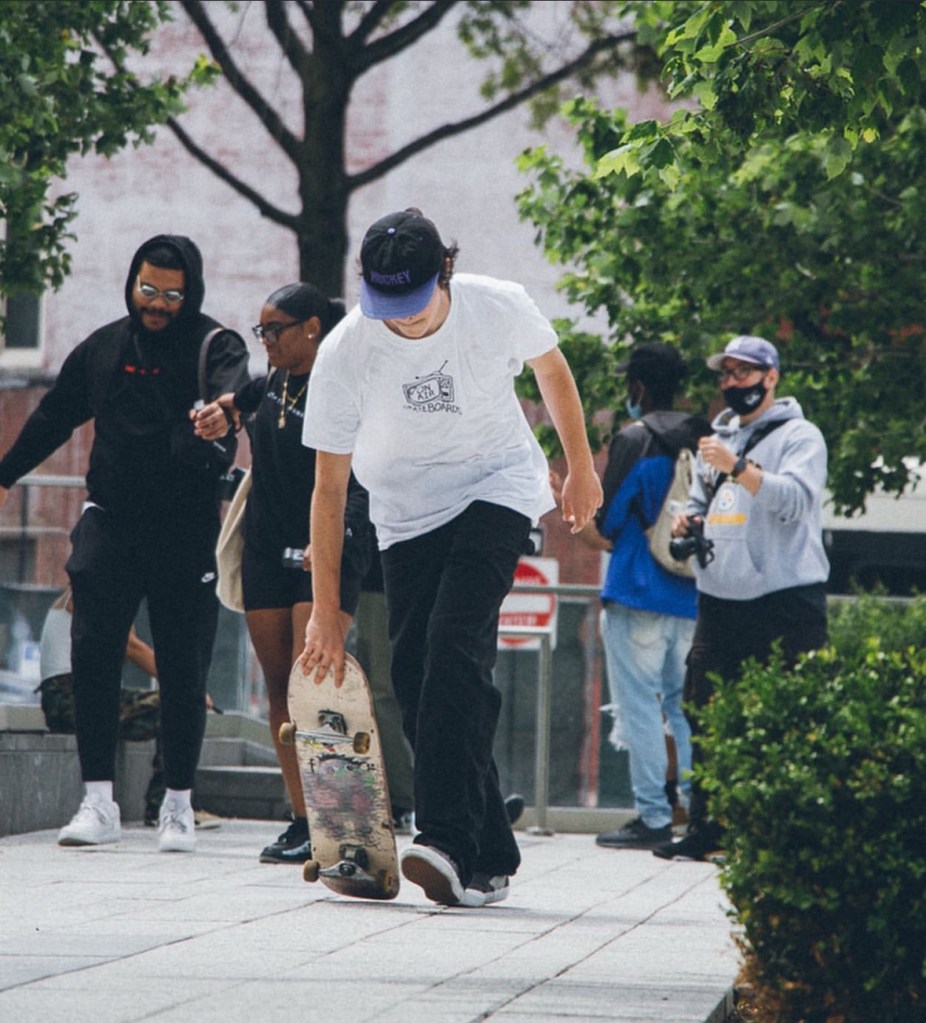
Ottmann: So I started on air over COVID, really, as a creative outlet for myself, and started it through the lens of skateboarding, my hobby and passion at the time and through it, created clothing and other productions videos of us skateboarding so it came from two places. One, my love for art and sort of a way to monetize that through clothing. And the other part of that was skateboarding, which was something that meant a lot to me and my friends as it’s what we spent our time together doing. So for me, this company was a way of empowering my community, my friends, to spend time on the things that we loved and spend time together.
Q: What was it like trying to find community during Covid times?
Ottmann: It was sort of a way for me and my friends to be excited about something during a time where we couldn’t necessarily be together, and as we started to be able to see each other more, as lockdown lifted, it really evolved into just something that forced us to spend time together. It was pretty organized. We did a lot of films, short videos on our skateboarding done by my good friend Tobi, who sort of started the company with me. And they were very organized. We always had direct meeting times and had a plan of the tricks we wanted and the shots we wanted, but the rest was very impromptu. I think that was one of the best things about it, is how the community we had expanded just through meeting new friends at skate spots and skate parks and clothing events.
Q: How did On Air help you be a part of the urban community and learn about the skating culture of NYC?
Ottmann: I definitely knew it from the outside quite well, growing up around it and being into skateboarding, but the New York City skateboarding culture is a fairly rigorous world, and people are very serious about what they do. So we learned pretty quick that, you know, if we wanted to sort of be taken seriously, we had to, well, nothing was taken seriously, but we had to take ourselves kind of seriously. If we wanted to reflect actual brand values, we couldn’t just be a group of kids who hung out. We had to create a website and sell clothing and throw events and you. Hmm, things like that, which again grew our community, our crew, but also grew our understanding of the way skateboarding, the world of it worked in New York City.
Q: How did you and the founding members collaborate?
Ottmann: It was me and my good friend Toby, primarily, where I did the clothing design, the artwork, and he did the film work. And together, we sort of combined our talents and our interests to create something that could be cool. We combined our interests to be able to explore them in a more professional way, in a way that could, you know, reflect, yeah, further in the future than just practicing for the fun of it.
Q: How have the careers and lives of the founding members evolved into adulthood? Has On Air helped your personal development?
Ottmann: Yes, it really has. I mean, Toby, who did the film work. He isn’t in college anymore. He chose to drop out and just do film full time, independently. And you know, he’s made it work for almost a year now, so that’s really cool to see him follow that passion that sort of was very early, explored very early on, in the context of on air. I And then, you know, we had other members, Milo, he did some art with us, always skated with us, and he’s doing architecture now. And you know, another continuation of someone’s creative exploration. I’m a combined major in mechanical engineering and design, which I also feel comes from those roots that definitely the design part with, you know, clothing design, t – shirt design, graphic design, but even the mechanical engineering to very you know, problem solving, I feel like a lot of the engineering values are fairly strong in entrepreneurship of problem solving and more in creativity, in a more confined space than just art or just creatively.
Q: Where is On Air now? Well,so over COVID, the first thing I did was, I got a lawyer and and filed my company on air skateboards as an LLC, because from that initial vision was we really wanted to sell clothes and be a clothing brand, but it definitely grew past the clothing pretty quickly and really turned into a way for me to be able to share clothing. You know, I’d give it to a lot of my friends. I’d sell enough to make back what I spent and give the rest away. Me or so, like, your gang all had like, the same kind of shirt, like, which is kind of cool, yeah, and it was, it was fun. I remember the first time I saw someone that I didn’t know on the subway in New York wearing one of my hats. And it was shocking, yeah, and it was really but it was really cool to see that, you know, other people liked it. I went up and, you know, I couldn’t believe it. Yeah, he told me it was one of his favorite hats. And saw an Instagram ad we put up for it. We definitely sold quite a few things to, you know, people we didn’t know, mostly at events, in person, but some online. I’m glad I started it younger, when there was less pressure to have it be successful. It was a lot less, because now it sort of can sit in the background while I’m here and doing college, but it’ll be there for me to be able to pick up when I want to, and it’ll definitely be something that I come back to in the future.
 Fiona Averill
Leave a comment